Our Blog
Who decided what ‘normal’ looks like?
Our Blog

I’ve never been particularly good at fitting into boxes.
To be honest, I’ve never been particularly interested in them either.
Over the years, I’ve collected quite a few labels: therapist, clinical supervisor, trainer, co-founder of DATS, visually impaired, member of the LGBTQ+ community, creative thinker, and thrill seeker.
Some of those labels fit comfortably, some less so.
The trouble with labels is that they can be useful right up until the point they start telling us who we’re supposed to be.
During my counselling training, I was one of the quieter people in the room.
I wasn’t disengaged. Quite the opposite. I was listening, thinking, reflecting, and probably examining things from more angles than was strictly necessary. While some people processed their thoughts out loud, I tended to process mine internally.
Looking back, I became aware that my quietness was sometimes interpretated in ways that didn’t quite fit who I was.
It got me wondering how often we make assumptions about people based on what can immediately see- or hear.
And it taught me something important.
Being quiet and being powerless are not the same thing.
As a visually impaired person and a member of the LGBTQ+ community, I’ve spent a lot of time thinking about identity, belonging, and what it means to be accepted for who you are.
I’ve also spent quite a lot of times questioning things.
Perhaps that’s where my rebellious streak comes from.
Not the dramatic kind.
More the kind that quietly asks:
‘Who decided that?’
“Who decided what confidence should look like?”
“Who decided what a therapist should sound like?”
“Who decided what ‘normal’ should look like in the first place?”
During my training, I came across Carl Rogers’ concept of ‘conditions of worth’ and remember thinking ‘That explains a lot!’
The idea is that we can absorb messages about who we should be, how we should behave, and what we need to do to be accepted.
The trouble is, that if we hear those messages often enough, they can start to sound like facts.
“You can’t do that.”
“People like you don’t usually do that.”
“Be more confident.”
“Speak up more.”
“Fit in.”
After a while, it can become more difficult to tell the difference between what we genuinely believe about ourselves and what we’ve simply learned to believe.
One of the things that counselling gave me was permission to question those messages.
To get curious.
To ask where they came from.
To decide which ones I wanted to keep.
And which ones I was happy to leave behind.
I’ve discovered that life becomes a lot less exhausting when you stop auditioning for a role you never wanted in the first place.
When Kate and I created DATS, we didn’t just want to teach counselling skills.
We wanted to create a place where people could learn, reflect, challenge themselves, and perhaps question a few assumptions along the way.
Not because everyone should think the same.
Quite the opposite.
Because people are different.
They learn differently.
They communicate differently.
Thy bring different experiences, strengths, identities, and perspectives.
And that’s not a problem to be solved.
It’s something to be valued.
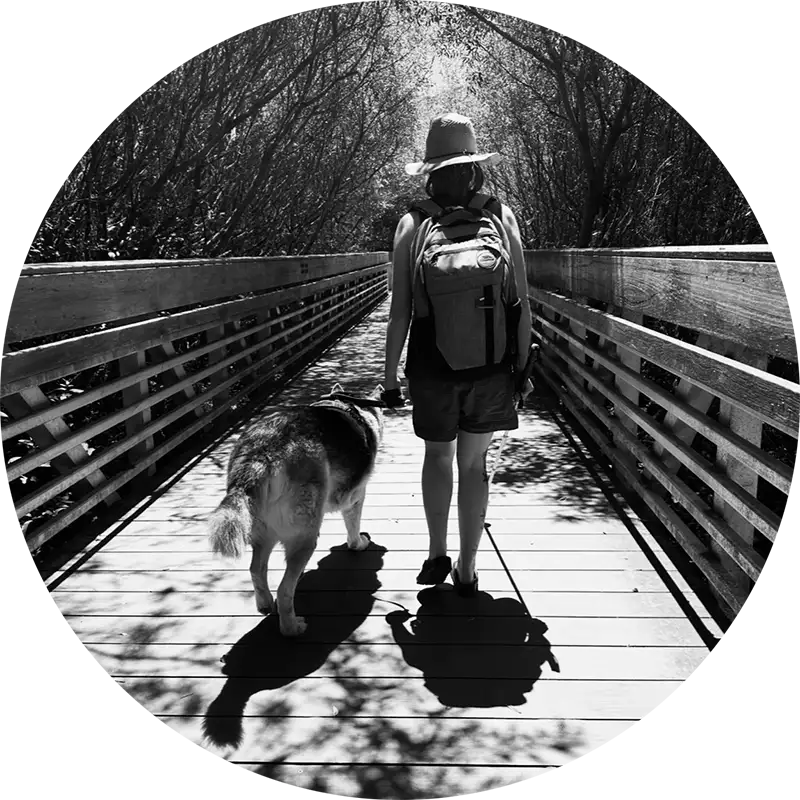
As for me, you’ll probably find me switching between therapist, supervisor, trainer, creative thinker, and enthusiastic seeker of new experiences.
Sometimes that means developing a new course.
Sometimes it means challenging an idea that everyone else seems happy to accept.
And occasionally it means jumping out of an aircraft at 13,00 feet for the third time and finding myself already planning the next adventure before I’ve even landed.
Perhaps that’s what I’ve learned along the way.
Growth rarely begins with having all the answers.
It usually starts with curiosity.
With asking questions.
With being willing to challenge assumptions.
Even the ones we’ve held about ourselves.
Then again, I’ve always been more interested in possibilities, than limitations.
Fortunately at DATS, the biggest leap is usually the one you take towards understanding yourself.